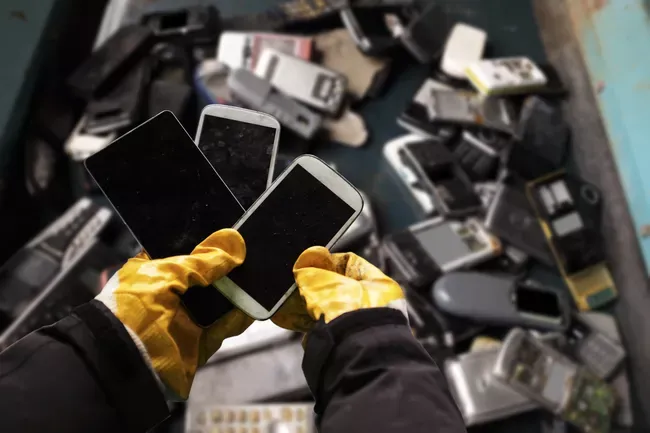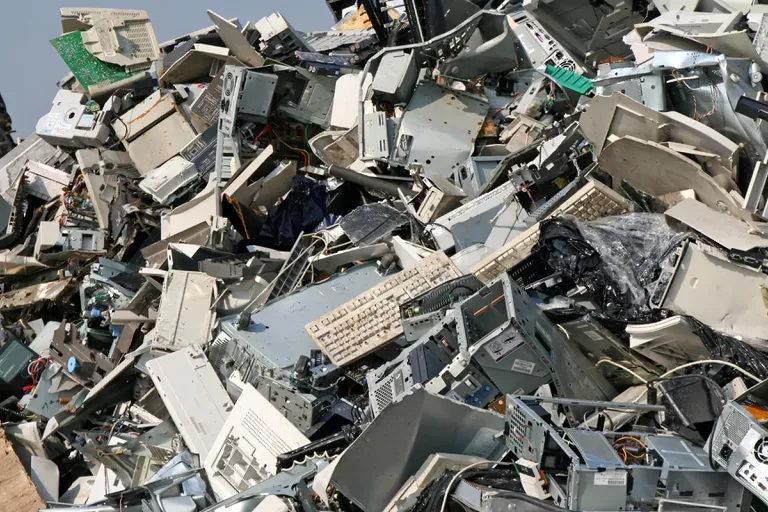
There is gold in your old phone. There is gold in the computer under your desk. Not much in each device, but together, e-waste is one of the richest sources of gold on the planet. This is the idea behind urban mining.
Why e-waste is richer than a gold mine
Electronics use gold because it conducts electricity well and never rusts. You find it in:
- Bonding wires inside chips (ICs)
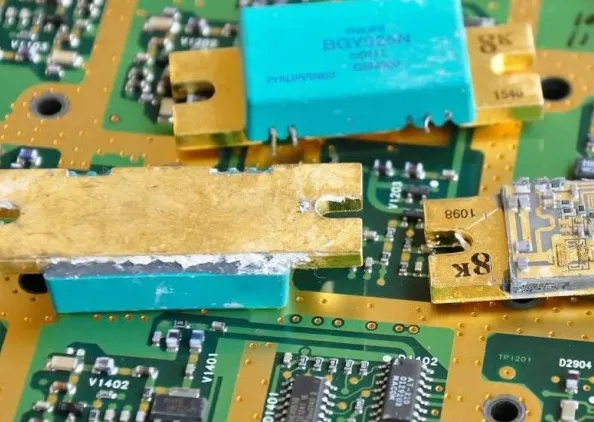
- Gold-plated edge connectors on circuit boards
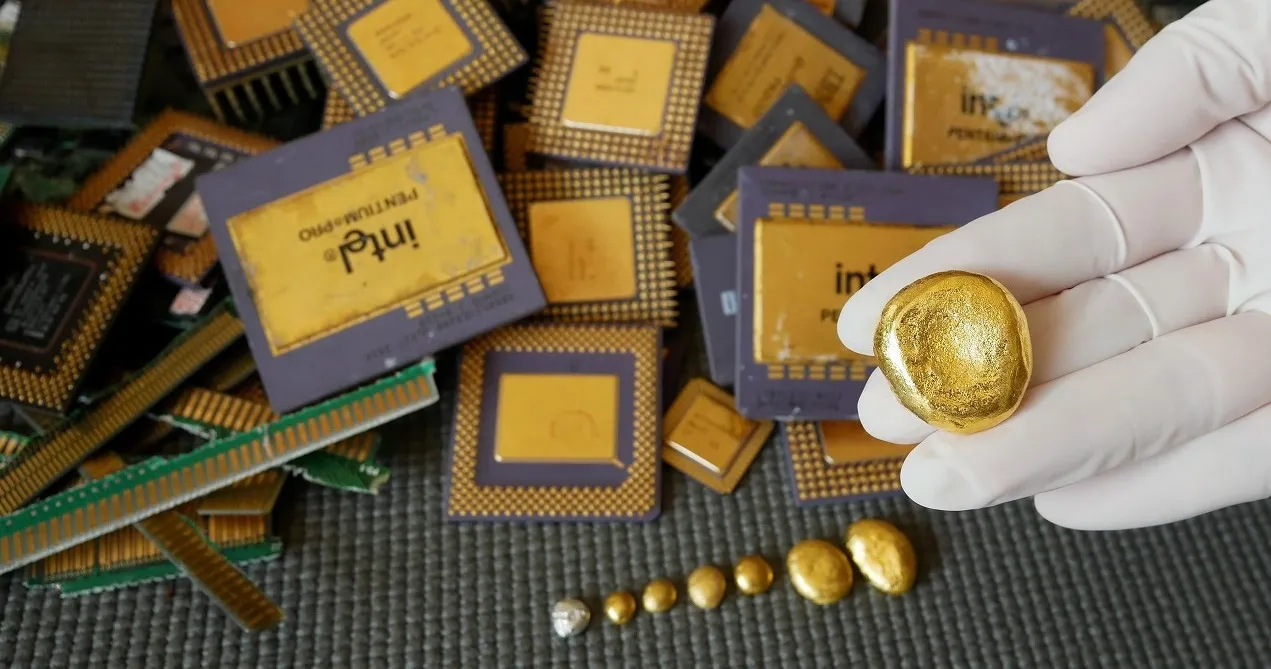
- Pins on processors
- Contacts on memory cards and SIM cards
The numbers are striking:
| Source | Approx. gold per tonne |
|---|---|
| Gold ore from a mine | ~5 grams |
| Mobile phone circuit boards | ~150 grams |
That is about 30 times more gold in circuit boards than in ore. Overall, e-waste can be 40 to 50 times richer in precious metals than ore extracted from mines.
The problem: gold is mixed with everything else
A circuit board is a sandwich of fibreglass, epoxy resin, plastics, copper, solder, and small amounts of precious metals. Getting the gold out safely is the hard part. Informal recyclers often burn boards in the open or dip them in acid, which harms workers and the environment and still loses much of the metal.
Step 1: Sorting
Material is first sorted into lots: ICs, memory cards, boards, plated parts and so on. Each type behaves differently, so each lot is treated as its own batch. This also makes it possible to measure the metal content of each lot.
Step 2: Thermal reduction
Thermal reduction is the long-standing industry method for material with a lot of organic content (plastics, resins, epoxy).
The material is heated in a controlled chamber. The organic part is reduced to carbonaceous ash. This has two benefits:
- The volume drops a lot.
- The precious metal becomes much more concentrated.
The ash, mostly carbon and mixed metals, is then crushed, classified by size and blended into a uniform, “well characterised” powder. Because it is uniform, a small sample gives an accurate measure of how much gold, silver or palladium the whole lot holds.
Step 3: Cleaning the exhaust
Heating plastics creates smoke and gases. Responsible recovery depends on controlling them. At Alchemy Recyclers:
- Exhaust is re-burned in an afterburner above 1100 °C with excess air, fully combusting harmful emissions.
- A variable-throat venturi wet scrubber removes smoke particles. Water droplets trap the particles and pull them out of the gas stream.
Step 4: Solvent extraction
Finally, solvent extraction separates the individual metals. It is also used directly for surface-plated items such as gold-plated pins and connectors, which do not need thermal reduction.
Which metals come out?
The same process recovers much more than gold. Our precious metal recovery service covers:
- Gold and silver
- Platinum, palladium and rhodium
- Copper
Why it matters
India imports most of its gold. Every gram recovered from local e-waste is a gram that does not need to be mined or imported. Read why precious metal recycling matters for India.
Have circuit boards, ICs or memory cards? Talk to us in Vadodara.